

Confused by the ‘Alphabet Soup’ of Medicare?
Medicare 101:
Your handy starter guide

We make Medicare Easier than 1-2-3
Let’s be real—Medicare can be a headache. Since everyone’s health and budget are unique, we focus on learning your story so we can offer personalized help. You can sleep better knowing we’ve got your back, not the interests of the big carriers.
Part 1: What is Medicare?
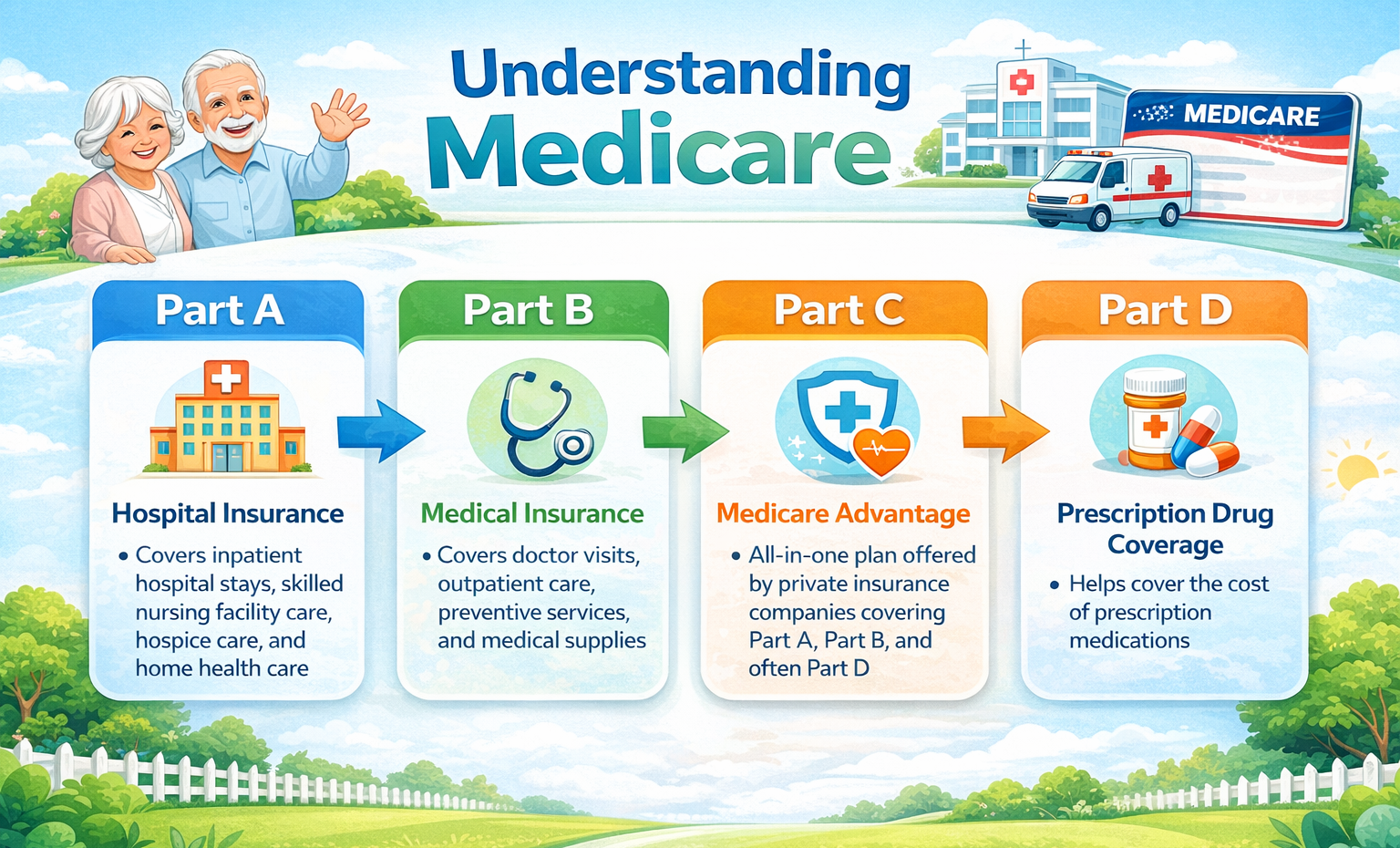
Medicare or Original Medicare* is for people who are 65 and older, are under 65 with disabilities, or have end-stage renal disease. It's a federal health insurance program consisiting of two primary parts: Part A (Hospital Insurance) and Part B (Medical Insurance). These two Parts help cover medically necessary services, such as hospital stays, doctor visits, and preventative care, allowing beneficiaries to use ANY doctor or hospital in the U.S.A. that accepts Medicare.
80/20 GAP
Medicare pays 80%, you pay 20%. The Problem… no limit on your 20%! This creates a huge Gap in Coverage. Don’t worry, we’ll help fill this GAP using one of two Paths, so read on.
We make Medicare as Easy as 1-2-3
* Prescription Drug Plan (Part D) is not included in Original Medicare, but should be added separately to avoid future lifetime penalties.** Click to review what Original Medicare Covers & Doesn't CoverPart 2: Your Two Main Paths
Path 1
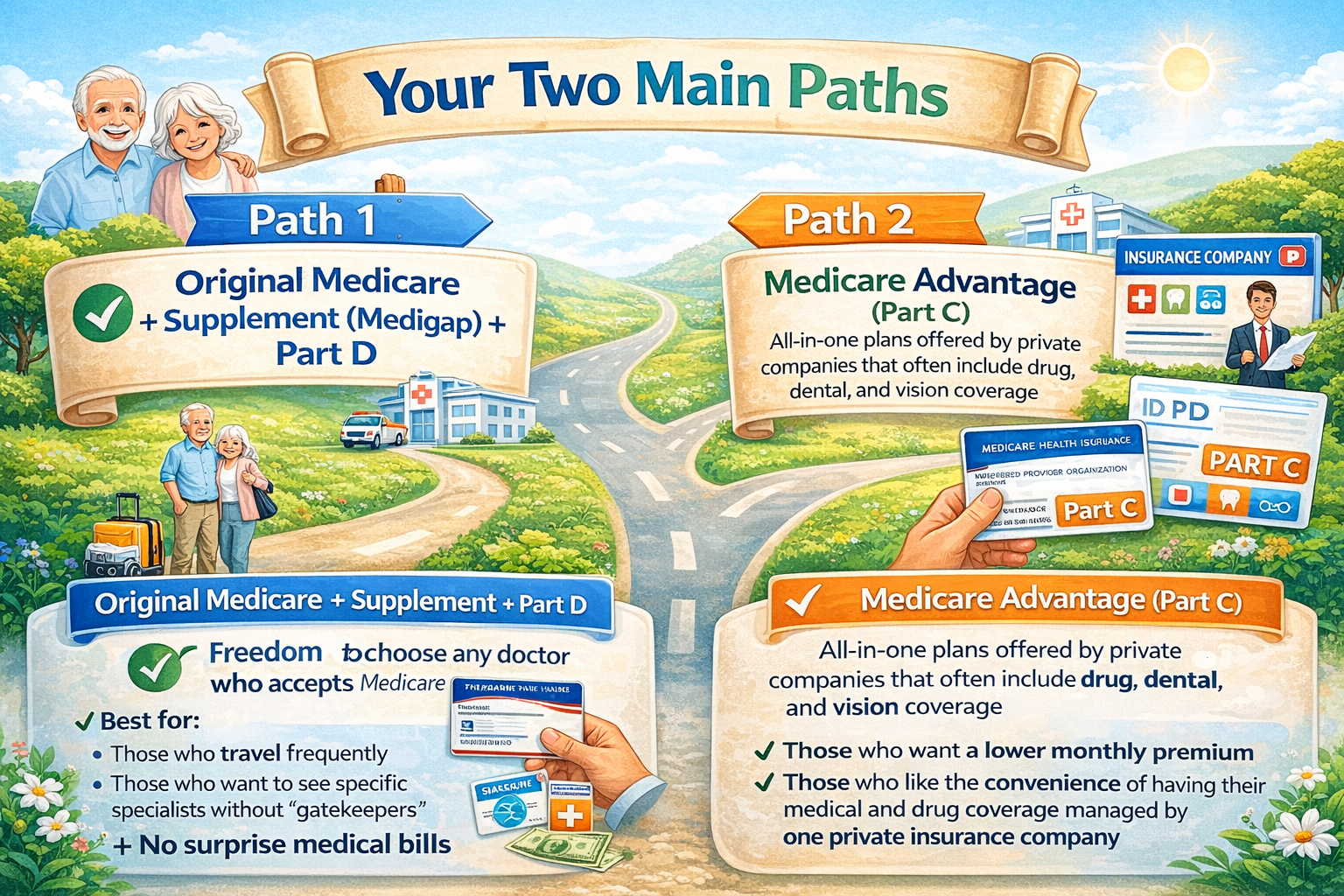
Original Medicare + Supplement (Medigap) + Part D (Drug Plan)
You stay on Original Medicare (government) and add a Medicare Supplement (Medigap) plan through a private insurer that helps pay for your share of the 20% Medicare doesn’t cover.
* Prescription Drug Plan (Part D) is not included with a Supplement plan, but should be added separately to avoid future lifetime penalties.Path 2
Medicare Advantage (Part C)
Medicare outsources your coverage to private insurance companies. Approved insurers and must offer the same or better benefits as Original Medicare by bundling Part A, Part B, and Part D. Medicare Advantage plans feature low or $0 premiums, max-out-of-pocket limits, dental, vision, & hearing benefits, prescription drug coverage, gym membership & more, but have more restrictive networks.
Part 3: Enrollment “Must-Knows”
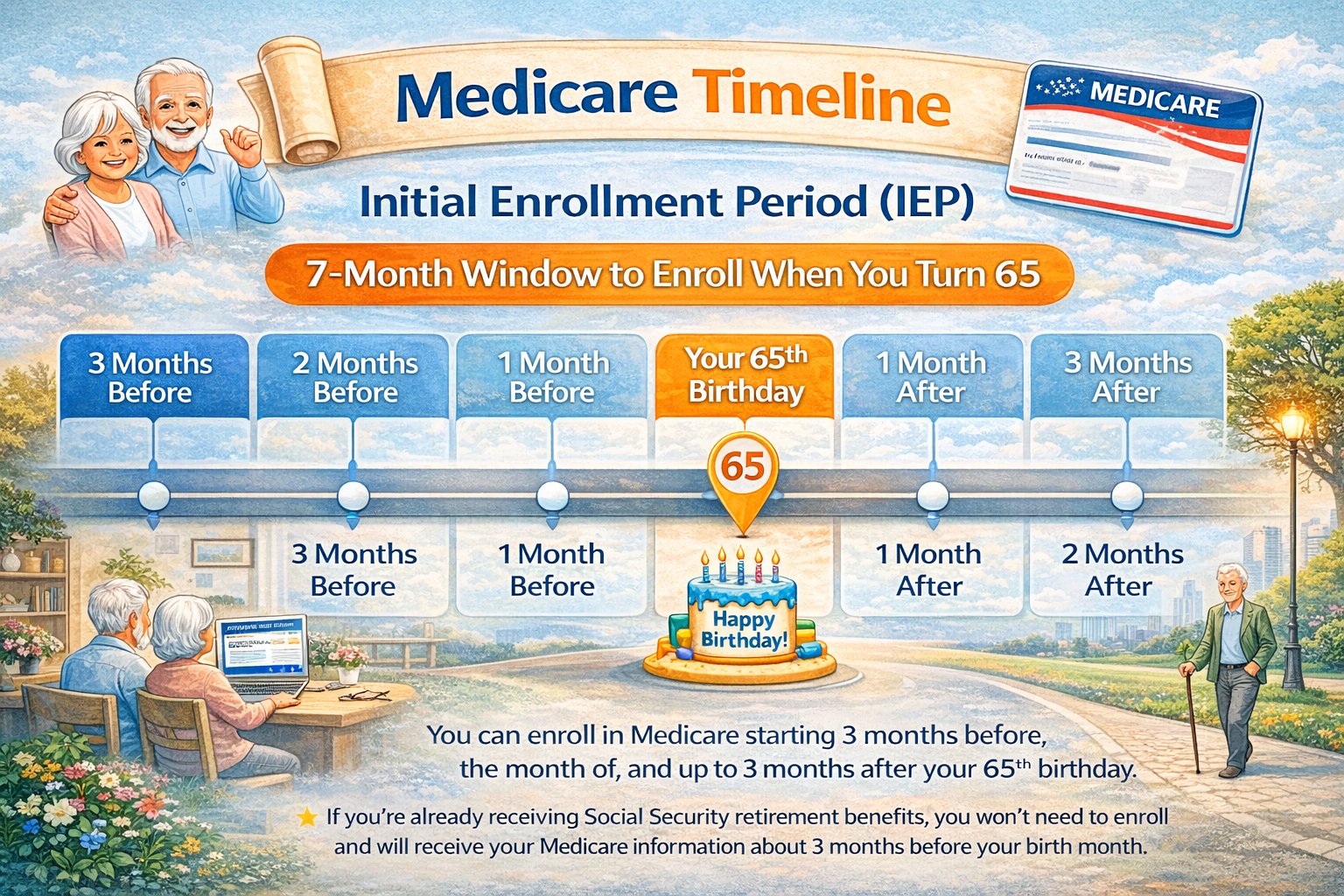
When you’re turning 65, you are in your Initial Enrollment Period (IEP). You can enroll within a 7-month window starting 3-months before, the month of, and up to 3 months after your 65th birthday.
-
If you’re already receiving Social Security (SS) benefits at least four months before turning 65, enrollment in Medicare Parts A and B is automatic, with your card arriving in the mail beforehand. If you are not taking SS benefits at 65, you must apply through the Social Security Administration during your 7-month Initial Enrollment Period (3 months before, the month of, and 3 months after your 65th birthday) to avoid lifetime penalties. We’ll help!
-
Many people don’t realize that turning 65 doesn’t always mean you must enroll in Medicare immediately—but getting the timing wrong can lead to permanent monthly penalties. If you or your spouse are still actively working and have employer-sponsored health insurance, you may qualify to delay enrollment. Contact us for more details!
-
When you qualify for Medicare benefits you lose any tax credits (APTC) you qualified for and will pay full price for your Healthcare.gov or state exchange (e.g. ConnectForHealthCO, Covered IL, etc.). Medicare enrollment is likely more affordable and will have much better coverages and benefits compared to your full priced marketplace plan. Plus, if you fail to enroll in Medicare when you should, you may be subject to LIFETIME penalties.
-
It's recommend to cease all HSA contributions at least 6 months before applying for Part A as "excess contributions" are subject to penalty. You can't ADD new HSA money, but you can use existing HSA funds tax-free, for qualified medical expenses, including Medicare Part B & Part D premiums (excluding Medigap).